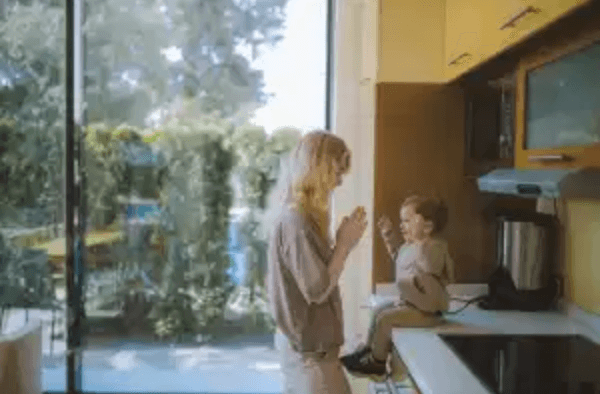
- Ways to help a child with speech delay who struggles to pronounce words
- How to clap out each syllable, as recommended by the speech pathologist
Part of my son’s ASD diagnosis was language impairment, and he spoke no words at aged two. Even as he learned a few words in the following couple of years, his pronunciation wasn’t clear and he struggled to sound out words with more than one syllable.
Here is what his speech pathologist taught me at the time — an easy method to help a child with speech delay sound out words.
Clap out each syllable
Sound out a word clearly and slowly, clapping your hand with each syllable.
For example, my son could only say ‘ter’ in the word ‘water’. So this is what I did when he was trying to communicate that he wanted his drink bottle:
- Make eye contact and say ‘wa-ter’, clapping my hands on ‘wa’ and ‘ter’.
- Encourage him to copy me.
- If he struggles, make the ‘w’ shape with my mouth and start him off. Place my hands over his to assist with the clapping.
- If he still struggles, mime the word ‘wa-ter’ and clap my hands.
Tips
- As with my son and his water bottle, use something that your child asks for multiple times a day. This will help motivate them and give you more opportunities to practise. I also used the word ‘cra-cker’ with my son as he loved snacking on them. It could also be your child’s favourite toy.
- Deliberately put those things out of reach so that it incentivises your child to communicate their needs.
- Try not to hand your child the object until they demonstrate some effort. This could be as little as just making eye contact, or forming a silent shape with their mouth. That’s still great! Hand them the object and shower them with praise. It’s enough to just make small progress gradually over time, and to repeat the exercise regularly as part of your daily routine. The key thing is that it doesn’t cause too much stress to either of you.
Summary
Use an object your child asks for multiple times a day, to practise clapping out the word together.
Make eye contact before you start, and help them along by mouthing or sounding the first sound.
 Autism Hacks