- Teach your autistic child how to talk about themselves
- Use photos of people and objects that your child is familiar with
As part of his ASD diagnosis my son struggled to talk in the first few years of his life, but he showed interest in learning when it involved familiar people and objects. So I made a photo book and used that to teach him how to talk about himself.
Here’s how I did it.
Top tips
- Use real photos
My son has never been responsive to illustrations or symbols, but he loves looking at real photos of familiar people and objects. So I took actual photos of everything — family members, rooms in the house, our car; his favourite toys, everyday items, food; playgrounds, car parks, school. - Design it like a real book
My son always loved to look at books, long before he could speak or read, so I used the layout of a real (simple) picture book. On each spread, I inserted the writing on the left page and the picture on the right, both large. I chose to make the book hardback to give it the ‘real book’ feel. - Use an online print store
I used Snapfish, but any major online photo printing service will have the option to make photo albums very easily. Select a default design and change the layout to have one sentence and one photo large on each spread. - Use a scrapbook or existing photos instead
If you already have printed photos, you could just stick them into pages of a notebook and write on the opposite page.
‘My name is….’
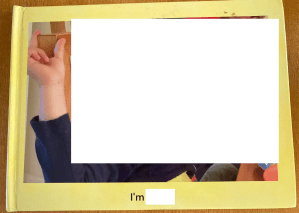
First, I made a self-introduction book. I included the phrases:
– I’m [name]
– I’m [X years old]
– This is my house
– This is my car
– This is Monkey (my son’s favourite toy)
Question and answer
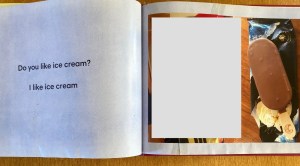
In the second half of the photo book, I introduced the phrase ‘Do you like…?’ This helped my son learn how to name his favourite things and respond to this very common question:
– Do you like ice cream? I like ice cream
– Do you like pasta? I like pasta
My family
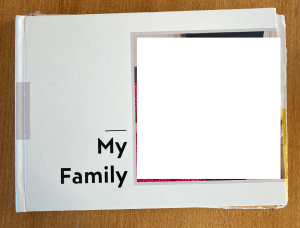
Next, I made a photo book called ‘My Family’ to teach my son the names of family members. I photographed everyone doing common activities so that my son could practise describing simple every day actions.
For example:
This is mummy. Mummy is eating pasta.
This is daddy. Daddy is brushing teeth.
This is [his sister]. [Sister] is playing with a ball.
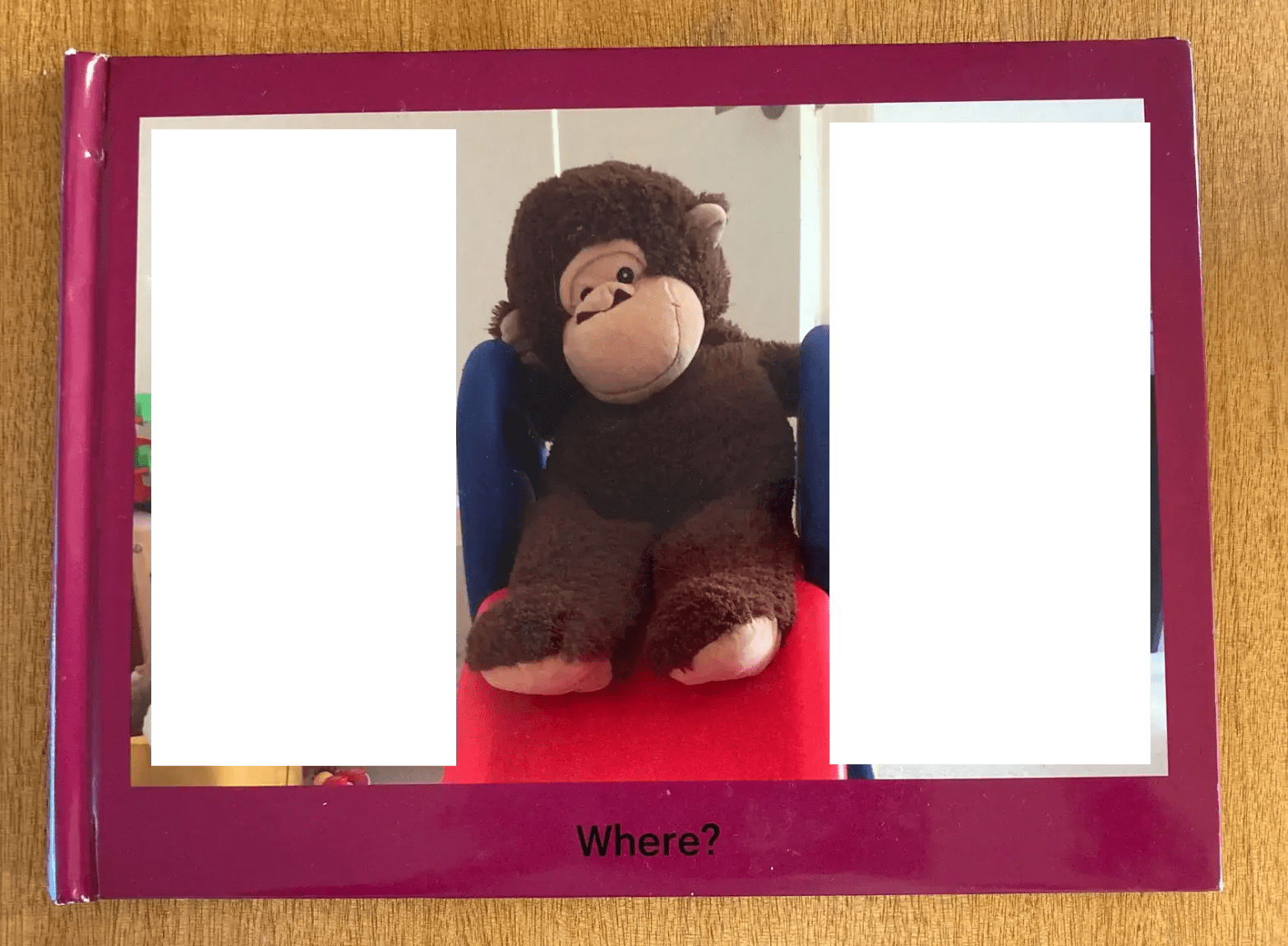
Where…?

This photo book features the very useful phrase ‘Where is…?’ and prepositions such as ‘on’, ‘under’, ‘in’ and ‘on’. Again, I took photos of family members and my son’s favourite toy Monkey in various situations around the house.
For example:
– Where is daddy? Daddy is under the table.
– Where is mummy? Mummy is in the car.
– Where is Monkey? Monkey is on the slide.
Tip Make it comical and surprising to make your child laugh and pay attention!

Summary
Photo books are useful for teaching key words and phrases about everyday people and objects
Make it look like a real book with large writing and photos to give it a special feel.
 Autism Hacks