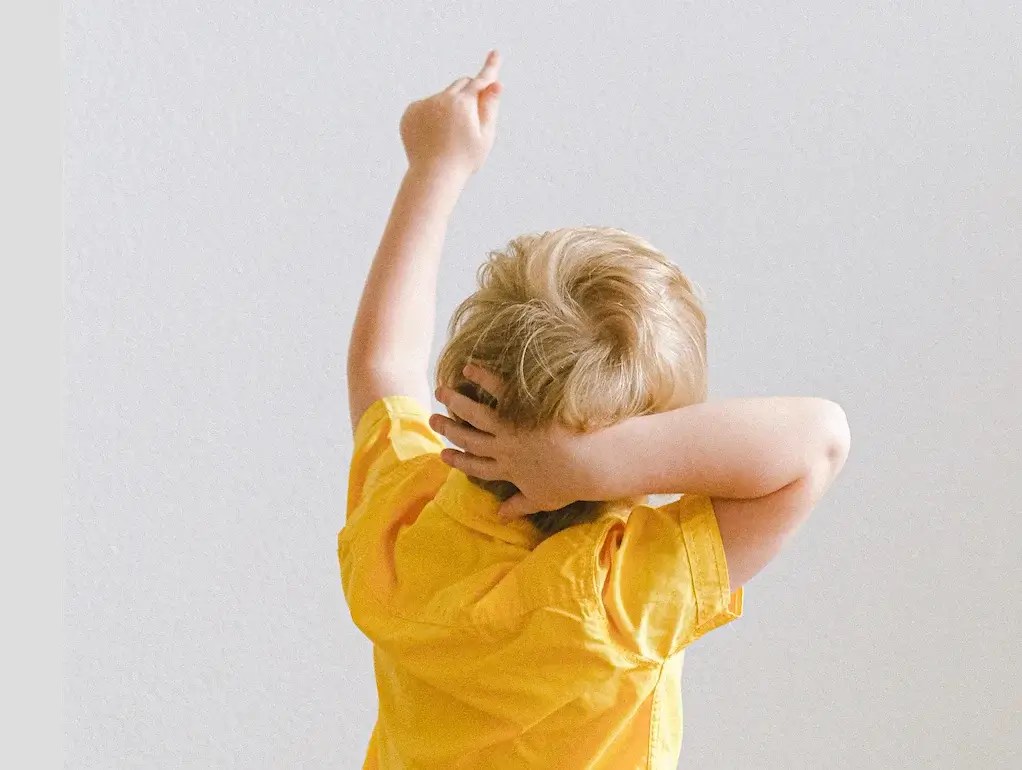
- Encourage pointing to ‘request something’ and to ‘respond to a question’
- Use everyday items that your child uses frequently
Along with his speech delay and lack of eye contact, my son’s inability to point at objects was one of the earliest indications that eventually led to his ASD diagnosis.
So, in the early days, we practised finger pointing at home, using everyday items that my son used or requested multiple times a day.
Here’s how we did it.
Why it works
I found that the key is to build ‘pointing practice’ into my son’s everyday routine so that he doesn’t find it a chore. I also learned to motivate him by using items that he frequently asked for.
Pointing to request something
Here is how I taught my son how to point to an item when he wanted it.
1. Choose things that your child frequently asks for
Choose toys, snacks, the TV remote or other things your child requests frequently throughout the day. The more they ask for it, the more practice they get and the quicker it becomes part of your routine.
2. Place the items out of reach but visible
Place the items on a shelf or somewhere that your child definitely cannot reach. Make sure it is a safe location where your child won’t try to climb on furniture to get to. But make sure the items can be seen clearly from your child’s height.
3. Practise together
When your child is looking for the object, say ‘Where is [object]?’ and pretend to look for it. Then crouch down next to your child so that you are the same height and, very dramatically, point to the object on the shelf and say ‘There it is!’
For the first few attempts, gently hold your child’s hand and encourage them to point their finger (or hand) at the object. Then get the object off the shelf and hand it to them.
4. Pretend not to know
Once your child now knows where the object is kept, next time act dumb and pretend to know where it is. Say ‘Can you point with your finger?’ and touch their finger.
If your child is struggling to point, model it by pointing somewhere else, saying ‘Is it there? Or there?’
When you do this, crouch down so that you are the same height as you child, as I recommend for practising eye contact. Also, wait longer than you think necessary, to give your child plenty of time to have a go at pointing.
5. Guide their finger
If your child is not yet able to point independently, guide their finger and help them. Each time you practise, reduce the amount of support you give them.
6. Give them the object immediately
As soon as your child attempts pointing in any form, immediately hand them the object so that they see the cause and effect. And shower them with praise!
7. Be patient
It took my son years to learn how to point independently. But it did happen, and I believe the daily practice helped the process along. Don’t lose heart. Keep going.
Pointing as a response
1. Use a book
My son loves having books read to him, so I use those times to practise speech as well as pointing.
2. Choose a book that has detailed illustrations
I’m love books by Julia Donaldson and Axel Scheffler, such as Stick Man and The Snail and the Whale, because the illustrations are detailed without being overcrowded.
3. Ask questions that are specific
Once you’ve read a page, ask questions about the illustrations on the page. Be specific. For example:
Where is the boy wearing the red shirt?
Where is the bird sitting on the tree?
Where is the crying baby?
Say ‘Can you point?’ and touch your child’s finger.
4. Guide their finger
If your child is struggling, pretend to look for the answer, say ‘There it is!’ and gently guide their finger on to the page.
5. Repeat
I recommend asking the same questions using the same book over and over again. The point of this exercise is not for your child to think about the ‘correct answer’ but simply to practise pointing.
6. Then change
Once your child has successfully pointed at the correct answers on each page — or attempted to do so — you could ask different questions.
Utilise other hobbies
If your child is not into reading, you could try the following:
Watch TV or a film together, pause in the opening sequence or a favourite scene, and ask them to point to something on the screen.
Do colouring together, and ask them to point to something in the picture.
Use everyday items. Ask them to point to the patterns on their cup or socks, or anything you see out in the playground or in the car.
Offer two options
If your child is struggling to point to the ‘correct’ answer, offer them two options. I recommend using this technique for talking to a child with autism.
Open-ended questions or too many options can be overwhelming for a child with ASD. Instead, give them two distinct options. For example:
Point to two shelves and say, ‘Is Teddy on the white shelf or the brown shelf?’
Point to places on the page in a book and say, ‘Is the cat on the table or the sofa?’
Summary
Create situations where pointing is rewarded with a desired item.
Practise pointing when you’re reading, playing or watching TV together.
 Autism Hacks