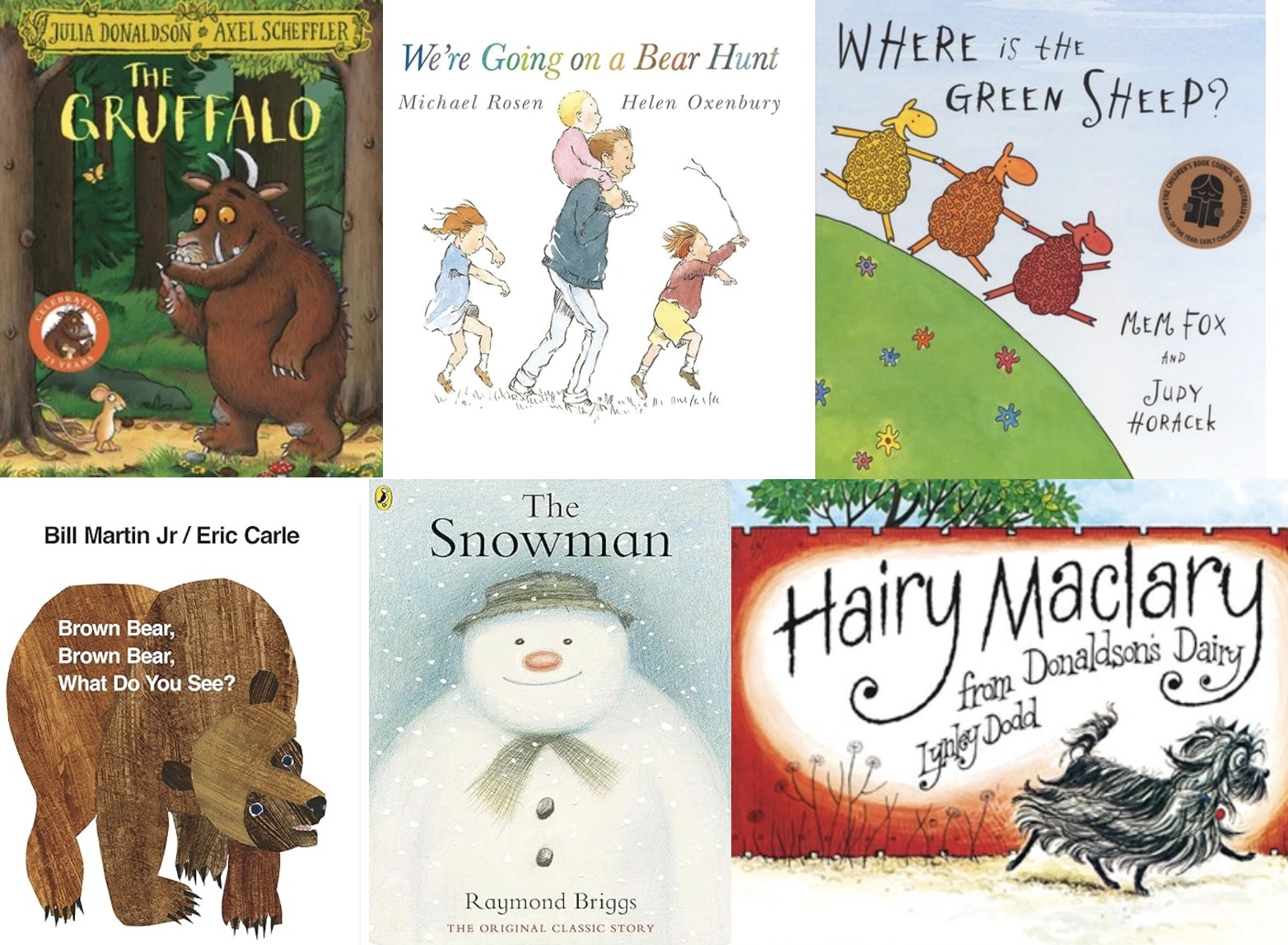
- Top recommendations of books that engage children with ASD
- Read these books together to practise speech and pointing
Long before my son learned to speak, he loved having books read aloud to him, and when he eventually started forming words many of them came from the books he had memorised.
Over the years, through reading hundreds of picture books hundreds of times over, I developed a sense of what particularly engaged him and encouraged him to repeat the words.
Here are my top recommendations of books for young children with ASD just starting out on their reading journey.
How to choose a book
My son, like many other children with autism, loves the rhythm of the words in a book and absorbs them like a melody in a song. So, in the early days, I chose books that had simple, rhythmical, repetitive phrases with the following features:
Question and answer
Simple, repetitive Q&A phrases that use key everyday words such as colours, animals and places around the home.
Onomatopoeic words
Words like ‘swish swash’ and ‘bang wallop’ that are fun to say and capture the drama.
Dramatic storyline
Simple but dramatic plots involving endearing characters and dynamic rhymes.
Unfussy illustrations
Large, vivid, captivating pictures that aren’t too busy.
Best picture books for children with autism
Here are my top recommendations of books that tick all the boxes.
1. Where’s the Green Sheep?
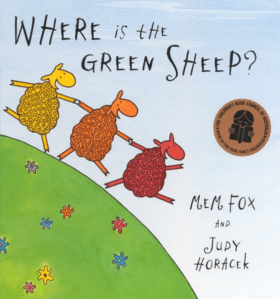
Featuring large text with key verbs and adjectives, Where’s the Green Sheep? is a great first book to read with your child.
It’s charming and funny, especially when it’s read by Hamish Blake on ABC Kids Play School Storytime. My son would sit in front of the mirror and imitate Hamish Blake, turning the pages of the book, doing all the voice inflections and admiring his performance in the reflection.
With any book that you choose, I recommend searching for a video of someone reading it and adding it to your ‘educational’ YouTube playlist. If you can’t find one, you could film yourself doing it!
2. Brown Bear, Brown Bear, What Do You See?

My son’s introduction to Eric Carle was, like many children, The Hungry Caterpillar. But I also love Brown Bear, Brown Bear, What Do You See? for its simple, vivid illustrations, introduction to colours and repetition of the useful phrase ‘What do you see? I see…’
Follow it up with Polar Bear, Polar Bear, What Do You Hear?
In fact, I recommend all of Eric Carle’s books for their whimsical, calming lyricism. To this day, my son loves reading Papa, Please get the moon for me, The Mixed-Up Chameleon and The Very Quiet Cricket.
Handily, there are beautiful animated versions of these books by Illustrated Films that can support your child’s learning.
The Hungry Caterpillar (YouTube)
Papa, Please get the moon for me (YouTube)
The Mixed-Up Chameleon (YouTube)
The Very Quiet Cricket (YouTube)
3. The Gruffalo
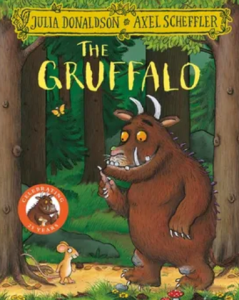
The Gruffalo was the first book I used to encourage my son to speak.
Because he loved it so much, we read it again and again until he memorised it. Over time, I started to deliberately pause mid-phrase and he attempted to fill in the words for me.
My son loves the clumsy Gruffalo character, the trio of animals that live in the wood and the clever mouse. I love the clever rhymes that stick in your head and the rich illustrations by Axel Scheffler that inspire conversations.
Follow it up with The Gruffalo’s Child, the slightly darker, more thrilling sequel.
My son also loves reading other Julia Donaldson and Axel Scheffler classics including The Highway Rat, The Snail and the Whale, Zog, Tabby McTat and The Smeds and the Smoos.
For many of these stories, Britain’s BBC has created beautiful adaptations, just so that your child can become really obsessed with these books.
4. We’re Going on a Bear Hunt
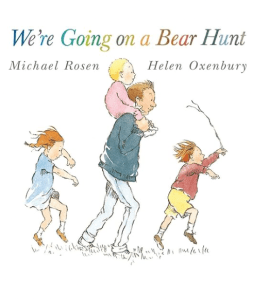
Based on a folk song, We’re Going on a Bear Hunt is full of drama and onomatopoeia. It also features humans, in case you needed a break from green sheep and Gruffalos.
The book is such a classic that you will find many renditions, adaptations and related resources online.
It also outlines an adventure that you can recreate with your child. It’s a great opportunity to match speech to body movement, something my son finds both helpful and comforting.
At one point, my son’s teachers printed out a map for him, and we used it to act out the story in the garden and in the house, over and over again.
5. The Snowman

This book has no words — and is great because of it. The Snowman is a timeless classic that uses pictures to tell the story of a boy living in the English countryside, whose snowman comes to life and takes him flying into the night sky.
Because the book has no text, it gives you a great opportunity to tell the story yourself. You can use words that you want your child to learn and focus on pictures of things that your child is interested in. Each time you look at it, you can change it up and follow your child’s lead.
If you’re planning to show your child the much-loved TV adaptation, a word of warning. The original book doesn’t feature Santa Claus; the duo make it as far as Brighton Pier on the south coast then head home, presumably because they realised they were going in the wrong direction for Lapland.
More recommendations
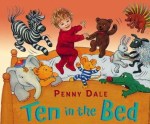
6. Ten in the Bed
Great for familiar rhymes, counting numbers, acting out the story
7. Where’s Spot?
Great for Q&A, matching speech to movement, acting out the story

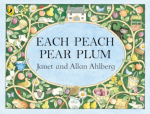
8. Each Peach Pear Plum
Great for looking for characters in the illustrations
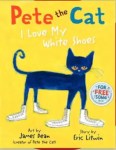
9. Pete the Cat series
Great for simple text, vivid illustrations, familiar activities
10. Hairy Maclary series
Great for satisfying rhymes, memorable characters, fun capers

 Autism Hacks