
I’m a mum of two and a learning support assistant at a primary school in Canberra, Australia. My son was diagnosed with ASD aged 4, and in the years following I have been trialling ways to support his progress at home. (See bio)
Here are my top tips for supporting a child with autism at home, the methods that I’ve found to be most effective in nurturing my son’s development and addressing his needs. I still use them everyday to help him communicate, follow expectations, deal with change and expand his interests.
I know that every child with autism is complex with varying needs and strengths, but I hope my experience might give you some ideas about what best suits your child and your circumstances.
1. Offer options when asking a question

As part of his ASD diagnosis, my son struggles to understand and answer basic questions such as ‘What would you like?’
So, I try to avoid open-ended questions and vague phrasing. Instead I offer him two concrete options. I find that this reduces confusion, clarifies boundaries and allows him to take control.
It also encourages him to be more open to negotiation and compromise. Read more
2. Deliberately make mistakes to prompt a response

I often motivate my son to talk by deliberately ‘acting dumb’. I find that it’s a good way of prompting a response or an interaction.
I might hand him the wrong thing, offer a choice that is absurd or pretend to get lost. When I read his favourite book to him, I hold back saying a word so that he would say it for me. I’d say ‘let’s go left’ when we both know we should go right.
We’re all hard wired to react when someone is clearly wrong or being stupid, especially when we want things to happen a certain way and they’re just not getting it! It turns out my son is just the same. Read more
3. Give instructions using positive, specific phrases

When giving instructions to my son, I try to avoid saying ‘Don’t…’
That’s because if I say ‘Don’t touch that’, my son only hears the last few words (‘touch that’) and it reinforces that action in his mind. Also, he might not understand what I mean by ‘that’. It’s too vague.
Instead, I describe in specific terms what I want him to do. In this case, I say ‘hands off and walk away’.
Instead of ‘You’re being too loud’, I say ‘Please use quiet voice’. Instead of ‘Don’t wander off’, I say ‘keep your hand on my bag’. Read more
4. Make visual prompts for transitions
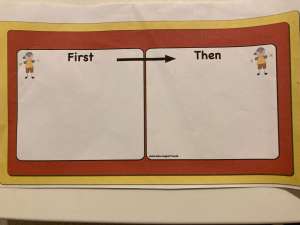
I’ve found visual prompts to be one of the most effective tools for helping my son transition from one activity to another. Over the years his teachers and therapists have created many visuals for him that show ‘First… Then…’ with pictures of the activities underneath.
At home too, I print out pictures of activities and create ‘First…Then…’ visuals to help him understand what is about to happen.
This has two benefits, One, it helps my son understand that he must complete the first activity (go to the toilet, go shopping) before he can do the next (watch TV, go to the playground). Two, it reassures him that the second activity will happen. Read more
5. Make eye contact to improve communication

Lack of eye contact was one of the first indicators of my son’s ASD, and we have been practising the skill at home since his diagnosis.
If my son wants to communicate with someone, it’s important for him to make eye contact with them so that they know he wants to say something. Equally, if someone wants to talk to my son, he needs to turn and face them in order to fully engage with what they are saying.
When I want my son to look at me or listen to me, I first crouch down and bring my face into his field of vision. If his body is turned away I guide it around by gently touching his shoulders, arms or cheeks. And I ask him to look at my eyes or, if that’s difficult, my nose or my mouth. Read more
6. Interrupt play to encourage interaction

For years since his diagnosis my son preferred to play alone, in a repetitive way with a limited selection of toys. These days, he enjoys playing with his sister and is better at negotiating and being flexible, but he still prefers familiar routines.
In the first few years, I focused on playing cooperatively and broadening his range of play at home. For the best way to do this, I learned from my son’s OT and eventually emerged with a method best summed up as ‘interrupt and surprise’.
Prepare to channel your inner actor and unleash the drama, comedy and farce. Read more
7. Take turns to teach social skills

Over the years as I watch my son struggle with turn taking, I’ve come to realise how fundamental the skill is to functioning in society. We’re taking turns constantly throughout the day, whenever we’re interacting with someone, whenever we’re sharing a space or object with someone, whenever we’re in a public setting.
This means that if you’re unable to take turns, you fall foul of society’s rules and the consequences for breaking them, and you live in a constant state of stress and confusion.
Turn taking is tricky for children with ASD like my son, whose needs are often intense and urgent. They’re unable to recognise that the world doesn’t revolve around them. They struggle to observe other people and understand the social rules, often implicit, of the situation they’re in.
Years on from his diagnosis, we’re still working on turn taking every day. But way back on day one, we started with a simple game that my son’s OT recommended. Read more
8. Read aloud to practise speech and pointing

Part of my son’s diagnosis was language impairment, and for years he struggled to say complete, recognisable words. But when he eventually did, many of the words he said were picked up from books that we had been reading to him.
As with many children with ASD, my son loves repetition and has an excellent memory. So, by having the same books read to him again and again, he was able to memorise the words and anticipate them as they were being read.
This gave me an opportunity to play a few tricks that I’d learned from my son’s speech therapist that encouraged him to join in and say the words with me. Read more
9. Use photos to teach key words and concepts

Through the years my son has benefited from communication support that uses illustrations or symbols but, particularly at home, I’ve found that he responds better to real photos of actual people or places.
So I use photos to anticipate events, to show him where he is going and who he will be meeting. And I also use photos of familiar things to teach him new words and concepts.
One particular hit was the photo books that I made to teach him everyday nouns, verbs and Q&A phrases. He loved them because it featured family members doing funny things… and a cameo appearance by his favourite toy Monkey. Read more
10. Use YouTube to combine learning with entertainment

My son learns best through visual cues and songs, so I thank our lucky stars that he was born in the age of YouTube.
I felt guilty at first, as many parents do, but I quickly saw that YouTube videos were a great way of teaching my son new words and concepts without it being hard work for either of us. He was engaged, and I could make dinner. It was a great hack for both of us in the early days.
Around 4 o’clock in the afternoon, when I always felt like the day is an hour longer than it should be, I would announce ‘TV time’ and play YouTube playlists that I’d created.
I made playlists of videos about everything imaginable: sight words, colours, daily routines, telling the time, greetings, question-and-answer phrases, the solar system, yoga, origami… Read more
See more on…
Communication
- How to teach pointing to a child with autism
 Encourage pointing at home using everyday items
 - Reading aloud to a child with autism
 How to use books to help your autistic child learn to speak
 - ASD: Toy to help develop language
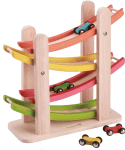 Teach your autistic child how to talk using a simple toy
 - How to help a child with ASD respond to questions
 Encourage your autistic child to express their needs and preferences by ‘acting dumb’
See all posts on Communication
Life skills
- How to make visual schedules for home
 Help your autistic child understand the day’s schedule
 - ASD: transitioning between activities
 Prepare your child with ASD for changes in routine or setting using visual prompts
 - Encouraging a child with autism to follow instructions
 Teach a child with ASD to follow instructions through direct positive phrases
 - Finger strengthening tips for a child with ASD
 How to help your autistic child incorporate hand strengthening exercises into daily activities
Learning
- How to teach a child with ASD using YouTube
 Teach your child to speak and learn new skills with YouTube
 - Autism and speech: use a photo book
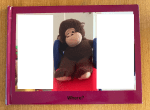 Teach a child with ASD to say self-introductory phrases with a photo book
Play
- Best picture books for children with autism
 Top recommendations for books that engage children with ASD
 - Taking turns: how to teach a child with autismTeach turn-taking to a child with ASD using a ramp racer
- Autism and cooperative play
 How to play with a child with ASD to expand their interests and engage in interaction
 - Lego and autism: develop speech, fine motor, resilience
 Use Lego to practise fine motor, speech and pointing with an autistic child
Movement
- Autism and W sitting
 Why children with ASD should be encouraged to sit cross legged
 Autism Hacks